Cybersigilism
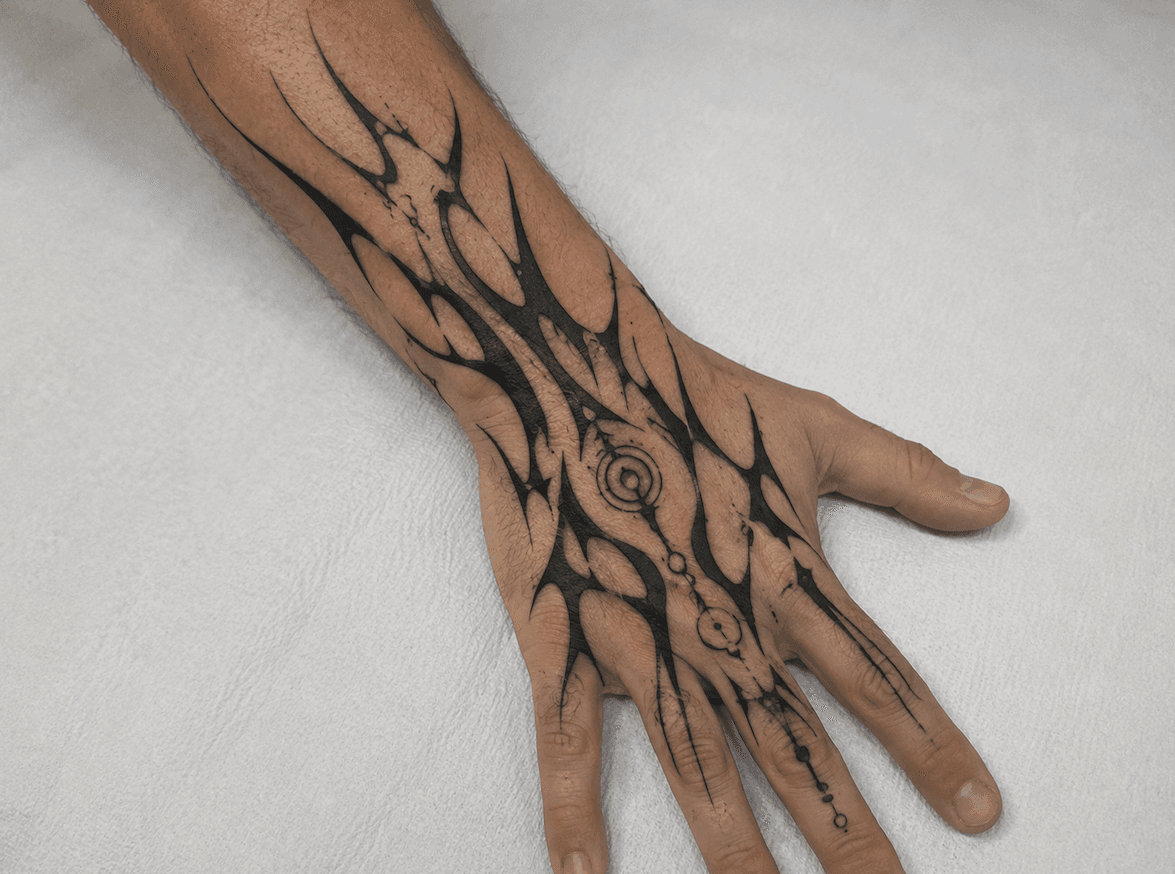
Cybersigilism is what happens when tribal tattooing gets rebuilt for the digital age — thorn-sharp spikes, web-like linework, and sigil shapes that look equal parts circuit board and dark ritual. Born on the internet and now one of the fastest-growing tattoo styles in America, it's defined by thin black lines, aggressive symmetry, and negative space that lets skin do half the work. The style flows with the body's architecture: sternum pieces that fan across the chest, spine runs that trace vertebrae, designs that wrap forearms and calves like armor. That anatomical flexibility is a quiet advantage for service members — cybersigilism adapts cleanly to placements that stay within regulation, and its blackwork base ages with strength. It also covers well and reworks well, making it a legitimate option for reimagining older tribal pieces. Our artists design each sigil custom; this is not a flash-book style, and no two pieces should ever match. If you want ink that reads as both ancient and futuristic — something between a rune and a glitch — this is the style built for it. Send your concept through Tattoo Talk and we'll sketch where the spikes should land.
See CybersigilismArtists →
Cover-Ups
A cover-up is the most technically demanding tattoo an artist can take on — and the most satisfying to wear. The old ink becomes raw material: a name you've outgrown, a faded barracks souvenir, a piece that no longer passes regulation. Our artists absorb it into a new composition built on value, saturation, and smart design, so what shows is the tattoo you'd have chosen in the first place. Working minutes from base gates at five studios, we design more cover-ups in a month than most shops see in a year: enlistment blockers before MEPS, out-of-reg placements after policy updates, ex names, and plain bad work that deserves a second draft. Some pieces cover directly; heavily saturated black may call for a few laser lightening sessions first to open up color and softer shading — we'll tell you honestly which road fits. And if you don't hate the old tattoo, a blast-over layers bold new work right on top and lets the history show through. Send a clear photo through Tattoo Talk and a real ATS artist maps what's possible within 24 hours, free.
See Cover-UpsArtists →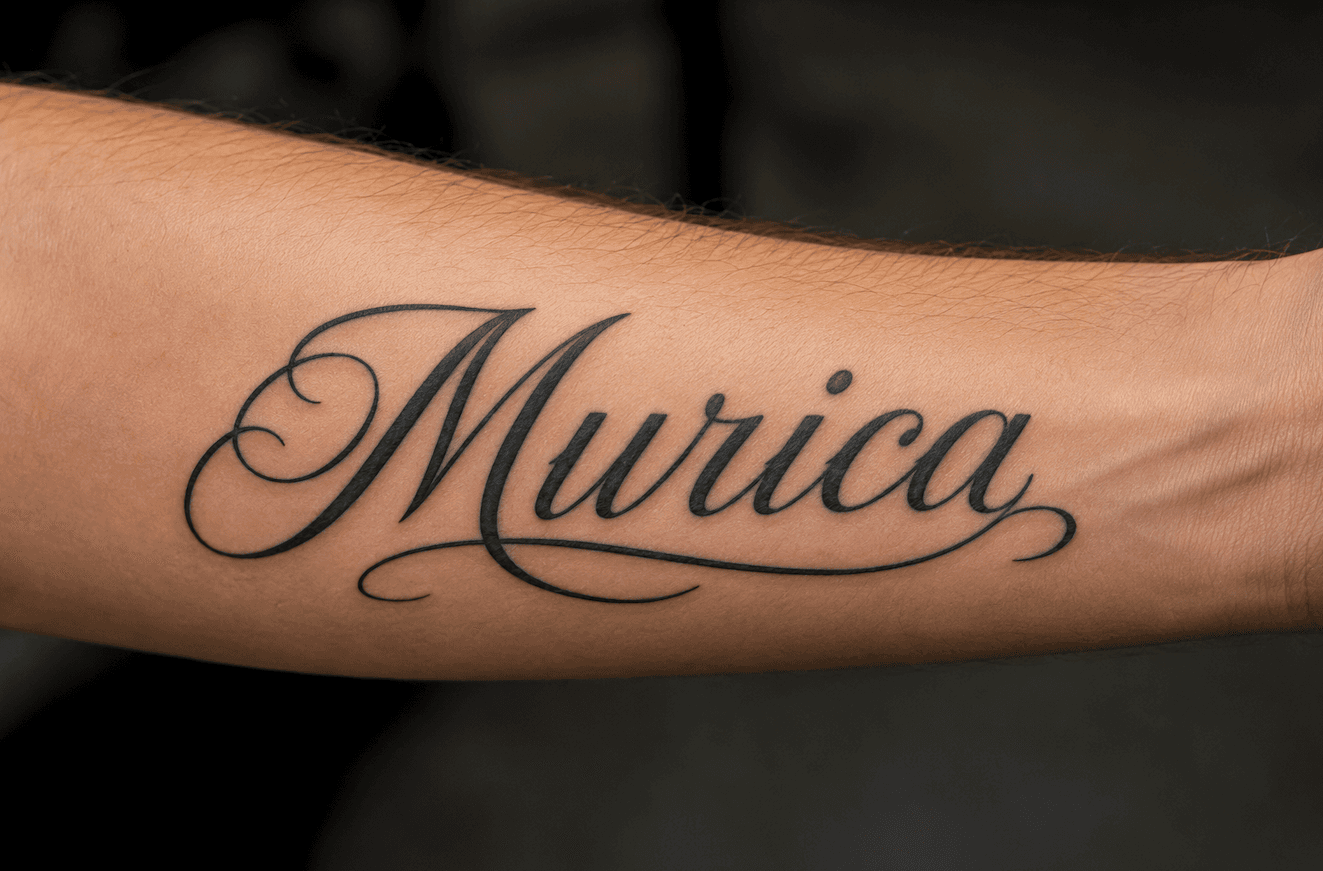
Lettering
Lettering is the oldest promise in tattooing: words you mean enough to wear. Script, block, gothic blackletter, brushed calligraphy — done right, lettering is typography for skin, and it demands an artist who understands letterforms, spacing, and how a line of text flows over muscle. We ink names, dates, coordinates, scripture, mottos, and last words worth keeping. For our military clients, lettering carries particular weight: unit mottos, KIA dates, grid coordinates of places that changed you, and the names of people who didn't come home. Precision matters most here — a beautiful font with poor letter spacing fails in five years, while clean structure stays readable for decades. Our artists design lettering at the size the words need, not the size you first imagine; small script blurs as ink settles, so we'll be straight with you about minimum sizes and placements that hold up. Lettering also pairs naturally with other styles, riding banners through American traditional pieces or anchoring realism portraits with a name and date. Bring the exact words to a free Tattoo Talk — spelling checked twice, always — and we'll show you what they should look like in ink.
See LetteringArtists →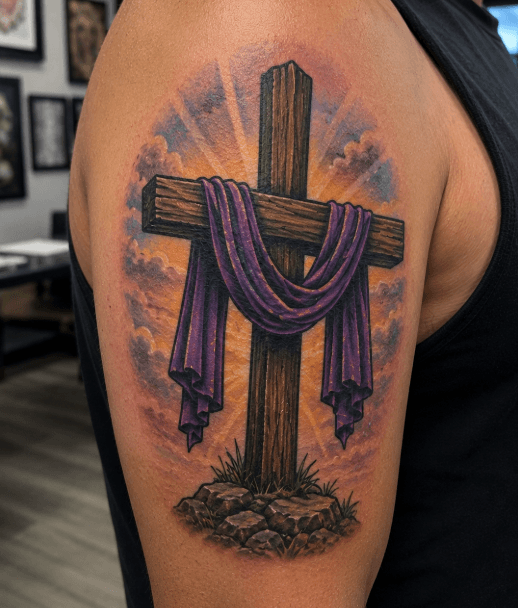
Realism
Realism is tattooing at its most unforgiving — portraits, wildlife, and objects rendered so faithfully they read like photographs on skin. There's nowhere to hide in this style: accurate proportion, believable light, and smooth value transitions are the entire game, which is why realism belongs in the hands of artists who've spent years mastering it. Our realism work spans black-and-grey portraits of family, memorial pieces of fallen friends rendered from photographs, wildlife and nature scenes, and hyper-detailed objects — dog tags, timepieces, hands in prayer. For military families, a realism portrait is often the most personal tattoo they'll ever get: a face carried through deployments, a grandfather's service photo, a battle buddy remembered exactly as he was. The reference photo matters as much as the artist — high resolution, good lighting, sharp focus — and we'll tell you upfront whether your photo can support the detail you want. Realism also rewards smart placement: larger scale preserves detail as ink ages, and forearms, upper arms, and calves give the work room to breathe. Send your reference through Tattoo Talk and our artists will tell you honestly what it can become.
See RealismArtists →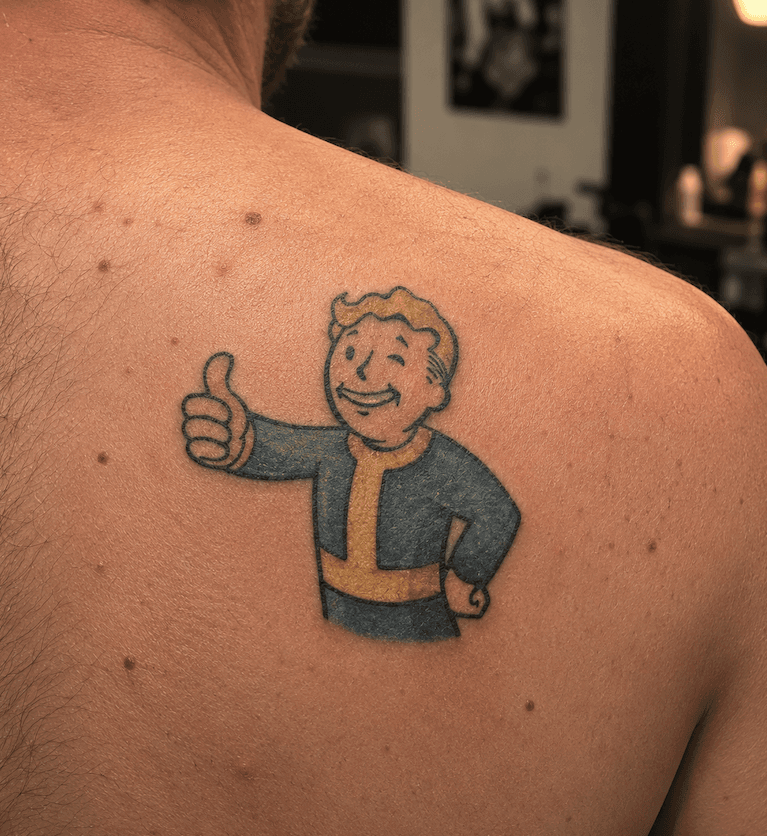
Color
Color work is tattooing with the full crayon box — saturated, vivid, engineered to stay loud for decades. Great color tattooing is chemistry as much as art: understanding how pigments sit in skin, how tones layer and heal, and how to pack saturation that survives sun and years. Our color artists work across the spectrum — new school, illustrative, watercolor effects, vibrant floral and animal pieces, and full-color realism that borders on photographic. Skin tone is part of the palette, not an obstacle; a skilled artist selects and adjusts colors that pop on your skin specifically, and we'll show you healed examples, not just fresh ones. One honest note we give clients near our Texas and desert-adjacent studios: sun is color's only real enemy, so placement and SPF discipline matter — protect the investment and vivid work stays vivid. Color also transforms cover-up conversations, layering brightness over lightened older ink for results blackwork can't match. Whether you want a full-color sleeve, a single electric accent inside black-and-grey work, or a piece that looks like it was painted on, bring the idea to a free Tattoo Talk and we'll build the palette around you.
See ColorArtists →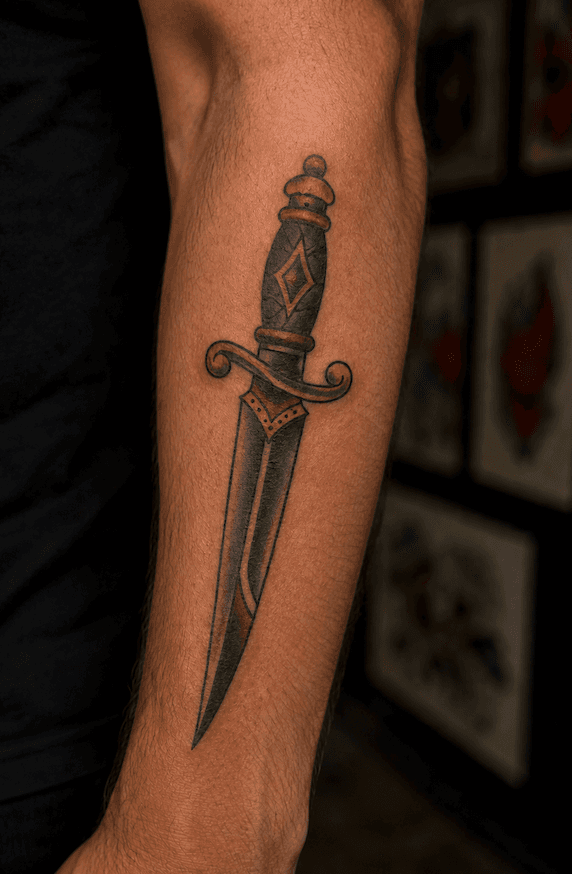
Neo Traditional
Neo traditional takes the backbone of American traditional — bold lines, strong silhouettes, timeless subjects — and feeds it a modern palette and illustrator's depth. Think jewel tones instead of primary colors, dimensional shading instead of flat fills, and subject matter that ranges from classic roses and daggers to portraits, animals, and ornamental detail that borders on art nouveau. The result reads instantly as a tattoo, ages like one, and still carries the artistic ambition of a gallery piece. It's one of the most versatile styles we do: strong enough for large-scale sleeves and thigh pieces, adaptable enough for standalone one-shots, and dense enough to make it a legitimate powerhouse for cover-ups and reworks of older traditional ink. Service members gravitate to neo traditional for exactly that blend — imagery with the weight of the classics (eagles, snakes, ships, reapers) rendered with enough sophistication to feel personal rather than off-the-wall flash. Bold structure also means the work holds up through years of field life, sun, and time. If you want a tattoo that honors where the craft came from while looking unmistakably current, start a free Tattoo Talk and tell us the image you can't stop thinking about.
See Neo TraditionalArtists →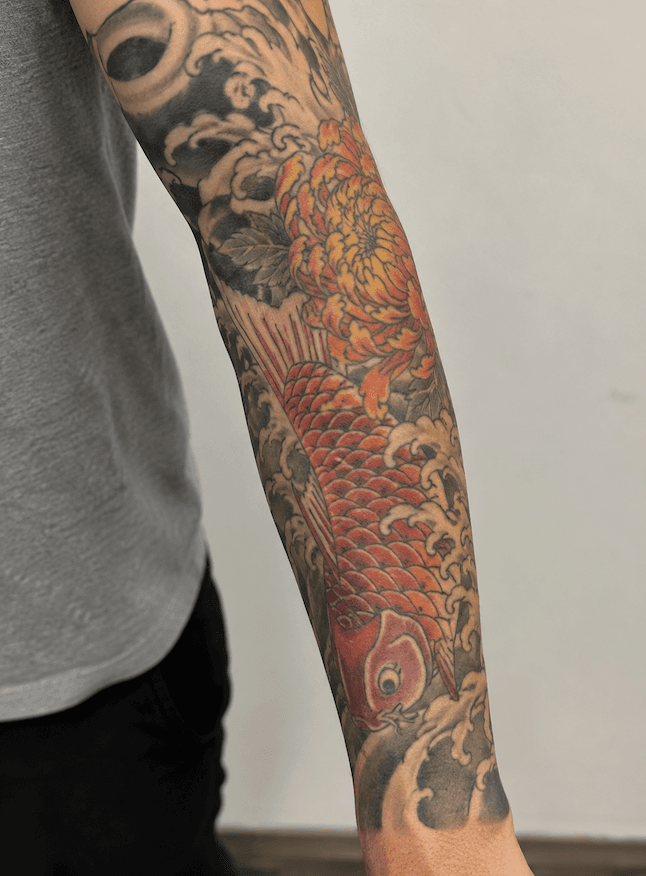
Japanese
Japanese tattooing — irezumi — is the deepest tradition in the craft: centuries of codified imagery where dragons, koi, tigers, hannya masks, chrysanthemums, and cherry blossoms each carry meaning, and where wind bars, waves, and clouds tie everything into one flowing composition. It's the original large-scale style, built for sleeves, back pieces, and bodysuits that move with the muscle underneath. Done properly, a Japanese piece is planned as a whole — background and subject designed together, not stickers collected over time — and our artists build them the traditional way, mapped to your body before a needle touches skin. The style's naval history runs deep, carried across the Pacific by generations of Sailors, and that lineage still shows in our Norfolk chairs. Japanese is also among the most forgiving foundations for cover-ups ever developed: its heavy backgrounds and layered composition absorb old ink like the style was designed for it — because functionally, it was. Whether you're starting a half-sleeve with a koi fighting upstream or committing to a full back piece, this is a style measured in sessions and rewarded in decades. Bring the concept to a free Tattoo Talk and we'll plan the full composition.
See JapaneseArtists →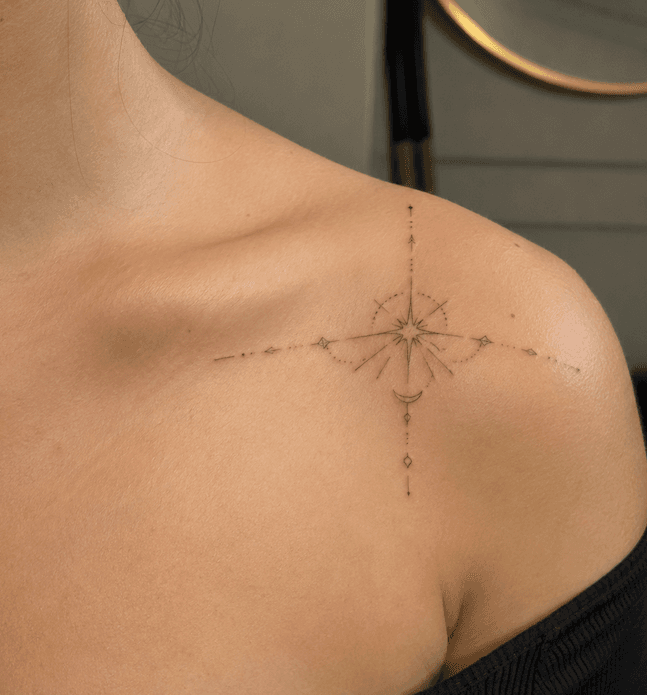
Fine Line
Fine line is precision tattooing — single-needle and tight-grouping work that produces delicate, detailed pieces closer to pen illustration than classic tattoo flash. Thin strokes, subtle shading, and restrained scale make it the style of choice for minimalist designs, botanical work, micro-realism, script accents, and meaningful pieces that whisper instead of shout. The elegance is deceptive: with no bold outlines to hide behind, every wobble shows, so fine line demands an artist with exceptional hand control and an honest understanding of how thin lines age. That honesty is part of our process — we'll tell you when a design is too small or too dense to heal cleanly, and adjust spacing so your piece stays crisp for years instead of blurring into shadow. Fine line's discreet footprint also makes it naturally regulation-friendly: small-scale placements that sit comfortably within uniform standards, ink that reads professional in any room. It's frequently a first tattoo, and just as often the tenth tattoo of a heavily inked collector who wants contrast. If you want detail measured in millimeters and meaning that doesn't need to announce itself, send your idea through a free Tattoo Talk.
See Fine LineArtists →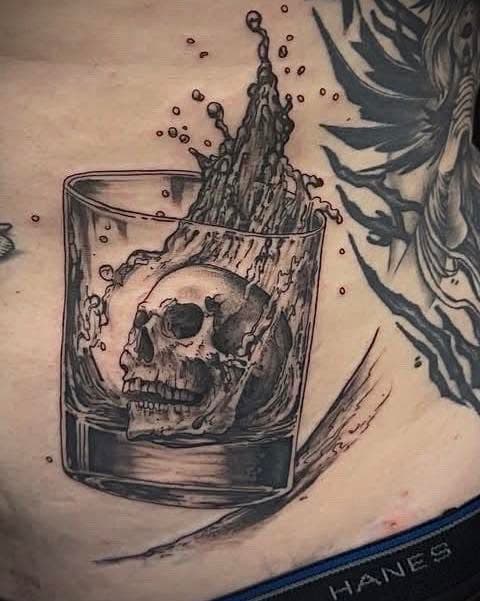
Black & Grey
Black and grey is tattooing distilled to its essentials: black ink, sterile water, and an artist's control of value from bone-white highlight to solid shadow. Born in the single-needle work of 1970s Southern California, the style built its reputation on smooth gradients, soft realism, and a timeless quality that color can't touch — because grey wash ages more gracefully than any pigment in the craft. It's the language of portraits, religious pieces, clocks and roses, smoke and skulls, and the fine-shaded chicano tradition that shaped modern tattooing. It's also the backbone of military ink: memorial portraits, battlefield crosses, folded flags, and dog tags rendered with the gravity the subjects deserve — imagery we tattoo with practiced hands, because at studios serving five bases, this work is sacred and regular. Black and grey scales beautifully, from a single small piece to a full sleeve unified by consistent tone, and pairs with a lone color accent when one detail deserves the spotlight. If you want a tattoo built on depth, permanence, and restraint — work that will look intentional at every age — start a free Tattoo Talk and tell us the story behind it.
See Black & GreyArtists →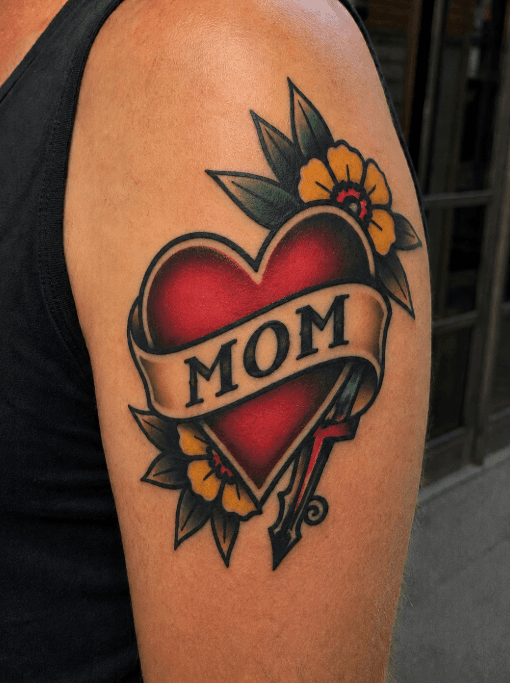
American Traditional
American traditional is the foundation everything else stands on: bold black outlines, a disciplined palette of reds, greens, and golds, and imagery carved into the culture by sailors and soldiers a century ago — eagles, anchors, panthers, daggers, swallows, pin-ups, and roses. The style was forged in port towns and base towns exactly like ours, inked by legends like Sailor Jerry Collins on service members shipping out across the Pacific, and its rules exist for one reason: they work. Bold holds. Simple reads. Traditional tattoos look strong across the room on day one and stay legible for fifty years, which is why the old-timers said it plainly — bold will hold. At studios built around military communities, we consider this style part of our inheritance: patriotic pieces, branch icons, homeward swallows, and flash-inspired classics done with clean, confident execution. Traditional also thrives at every scale, from a single walk-in banger to a full sleeve of stacked classics, and its dense structure makes it a reliable engine for cover-up work. If you want a tattoo your grandkids will recognize as a tattoo, this is the style. Walk in, or start a free Tattoo Talk.
See American TraditionalArtists →


